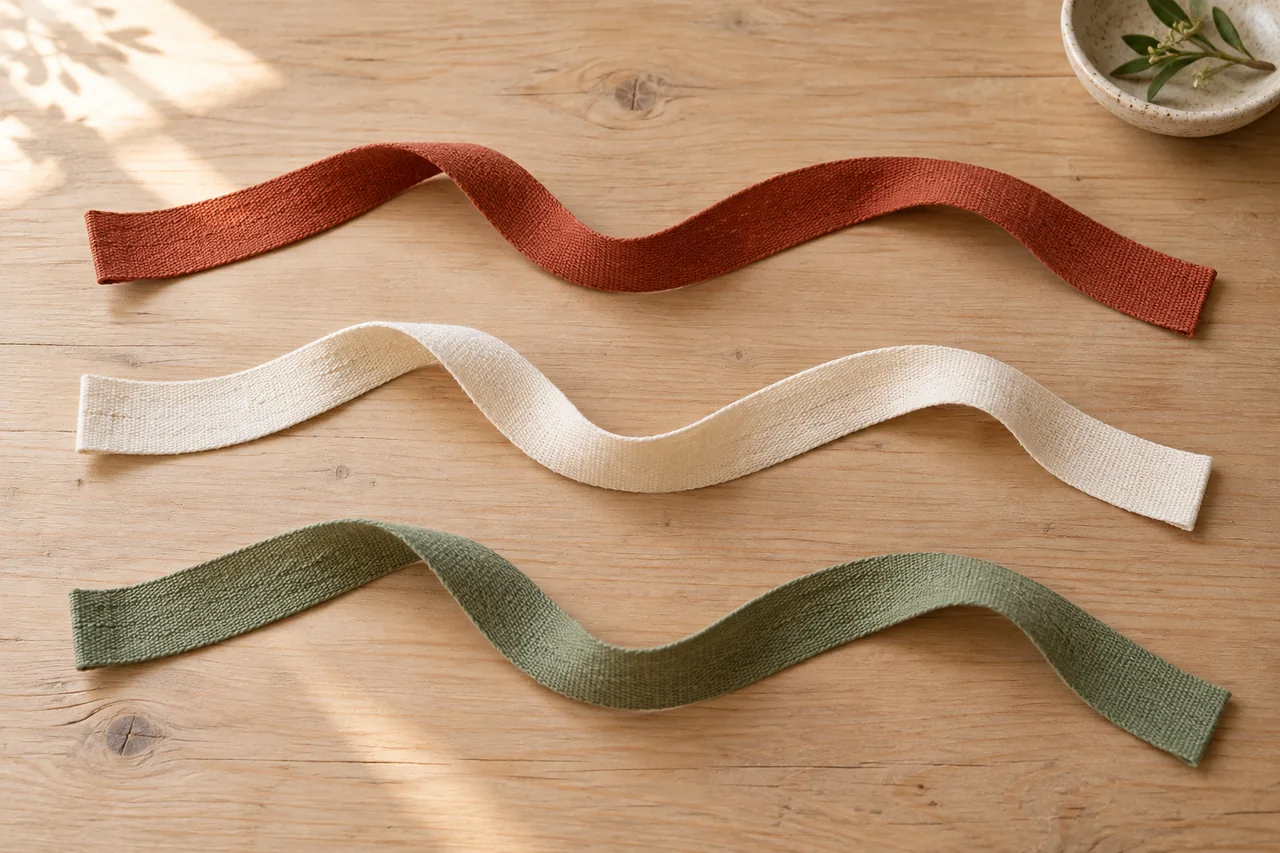
Learning a plait is easier when sequence comes before speed. In the basic three-strand version, the outer strand alternates over the current middle. Equal sections and a calm grip matter more than strong tension.
Make the movement visible with ribbons
Secure the upper ends of three similar-length ribbons at a safe table point. Move the left over the middle; the moved ribbon becomes the new centre. Then move the right over that current centre. Track positions rather than expecting one colour to stay left, repeating outside over middle.
Simplify the handover
You may set ribbons down while learning. Then hold two in one hand and one in the other, transferring the new centre after each step. Different finger positions can work if strands remain separate. Practise a few clean repetitions before hands become tense.
Choose a visible section of hair
Use a small side section long enough to hold in front of the shoulder. Detangle appropriately, divide into three similar strands and repeat the sequence. Keep hands near the latest crossing without pulling roots. Choose another section or leave short layers loose; the first practice need not last all day.
Recognise common mix-ups
Alternating over and under unintentionally changes the pattern; undo the last section and restart. If one strand runs out early, reassess length and amount rather than adding hair mid-practice. If hairs migrate between strands, slow the transfer and separate them rather than tightening.
Practise finishing separately
Secure ends with a suitable small band. Support the plait and, if wanted, gently ease tiny side loops from the bottom upwards. Pulling too much can open it; try again instead of disguising it with products. A narrow defined or softly expanded shape is a later visual choice.
Add one difficulty at a time
After several steady attempts, either move to a less visible location or increase hair amount. A French plait later adds side hair; a Dutch version crosses underneath. Learn those tasks separately if helpful. Ribbon practice, a visible side section and then a simple full style form a manageable progression.
Practise a short section repeatedly
Cover the lower ribbon ends with paper so only a small working area shows. Make four clean crossings, check, undo and repeat before exposing more length. This trains each movement rather than maximum distance. The ribbons need not be taut; transfer the calm approach to hair without using paper there.
Frequently asked questions
Must I use a mirror?
Not for ribbons. A mirror may help with hair but its reversed view can confuse. Choose a visible side section and the view that makes the sequence clearest.
Can I start with a French plait?
You can, but that combines basic crossing with adding hair. If hand coordination is confusing, learn the simple three-strand sequence first.



Questions and experiences
Share a question or a useful experience about this topic. Every contribution is checked before publication. Comments may be written in different languages.
Loading reader contributions…
Opening the form sets a necessary session cookie. No email address is required. Publication is subject to moderation and is not guaranteed. For deletion requests: Contact