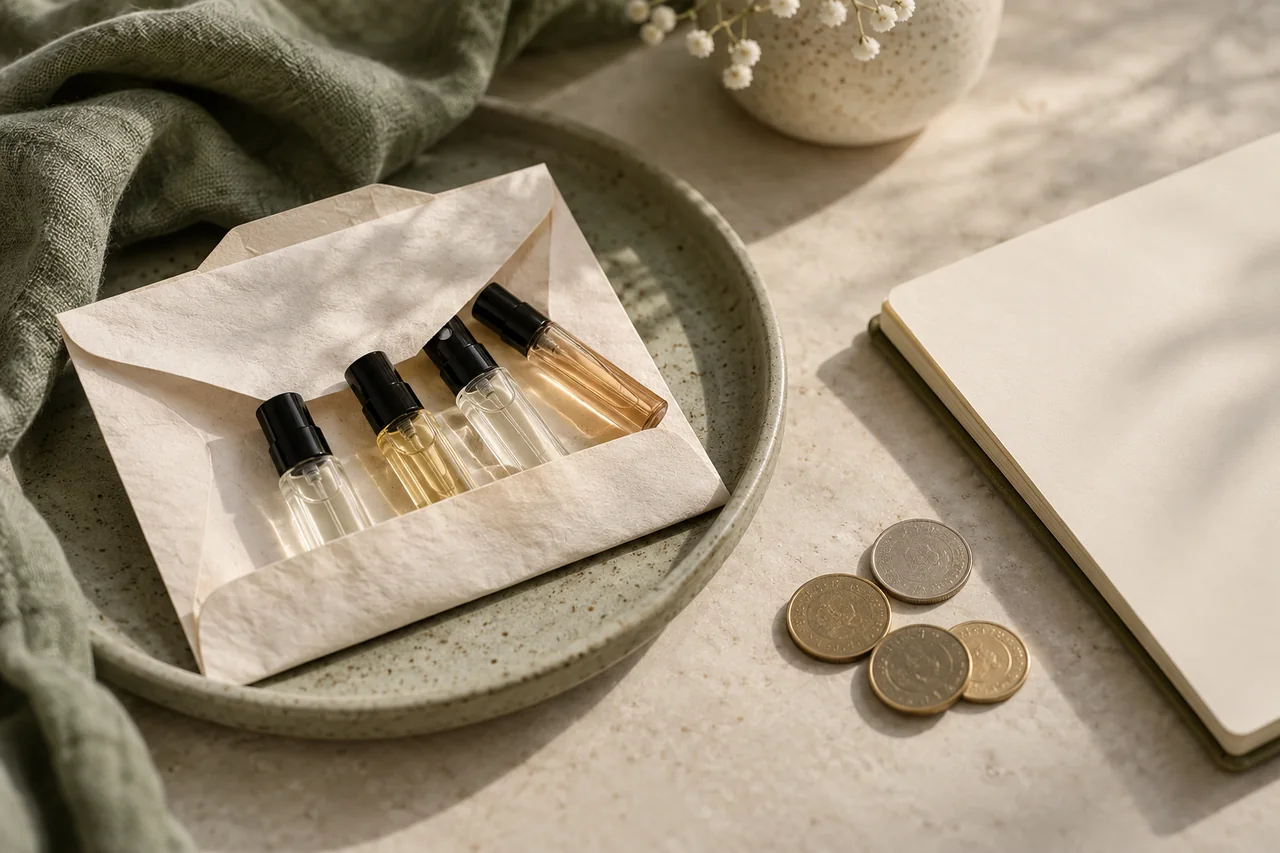
Samples can prevent an expensive blind purchase, yet become costly themselves when every description triggers an order. A sampling budget limits both money and the number of open choices. Decide what you want to learn and when the round will end.
Write the search question
A restrained fragrance for free afternoons is clearer than simply something new. Exploration is also legitimate, but belongs to a leisure budget. Replacing an almost-empty favourite differs from studying unfamiliar directions. Keep interesting but irrelevant suggestions on a later list instead of silently combining those goals.
Set a real ceiling
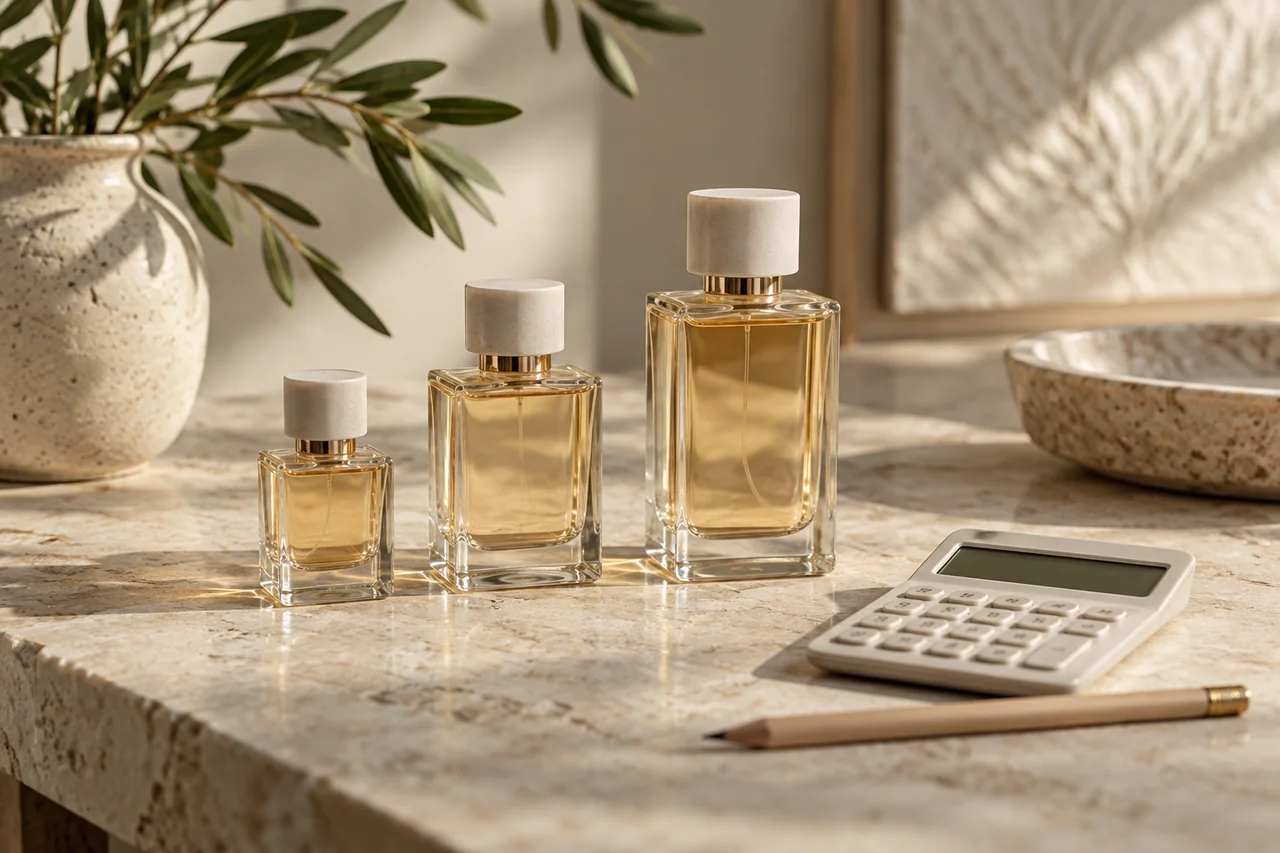
For a fictional €24 budget, three samples costing €18 plus €5 postage leave €1. Another set does not fit. A later full-bottle discount does not change today’s spending. Calculate before ordering; reduce or postpone the selection rather than lifting the limit for each appealing offer. Finalise candidate names before browsing shipping promotions.
Check identity and suitability
Choose traceable sellers, exact products and versions, with application and ingredient information available. Cheap unidentified samples are poor foundations for later decisions. Known intolerance requires appropriate professional clarification before the plan; budgeting is not medical testing, and small size does not make an unknown mixture suitable.
Keep a concise record
For each sample, write exact name, first impression, later suitable-use impression and next step: learn more, exclude for now or consider buying. Concrete notes such as too prominent in a shared car beat artificial scores. You do not have to finish every sample to know you do not want a bottle.
Separate trial from buying
Leave a pause without a compulsory number of days. Ask whether you still want the favourite, then compare useful sizes and total price. No clear winner can mean closing without purchase; the sample spending may have prevented a much larger unsuitable order. Start another round only for a fresh question, or honestly treat continuing sampling as a chosen leisure activity.
Frequently asked questions
Are paid samples a waste?
Not necessarily. A limited expense can support a specific choice. Assess whether it answers a question or only produces more orders.
Should I buy a large set because each sample is cheaper?
Only if enough contents genuinely interest you. Low per-sample cost offers little benefit when most remain unused.
How should I count sample costs credited towards a bottle?
Count the actual expense first. Credit is a possible later benefit only if you want the qualifying bottle and meet all conditions.
Questions and experiences
Share a question or a useful experience about this topic. Every contribution is checked before publication. Comments may be written in different languages.
Loading reader contributions…
Opening the form sets a necessary session cookie. No email address is required. Publication is subject to moderation and is not guaranteed. For deletion requests: Contact