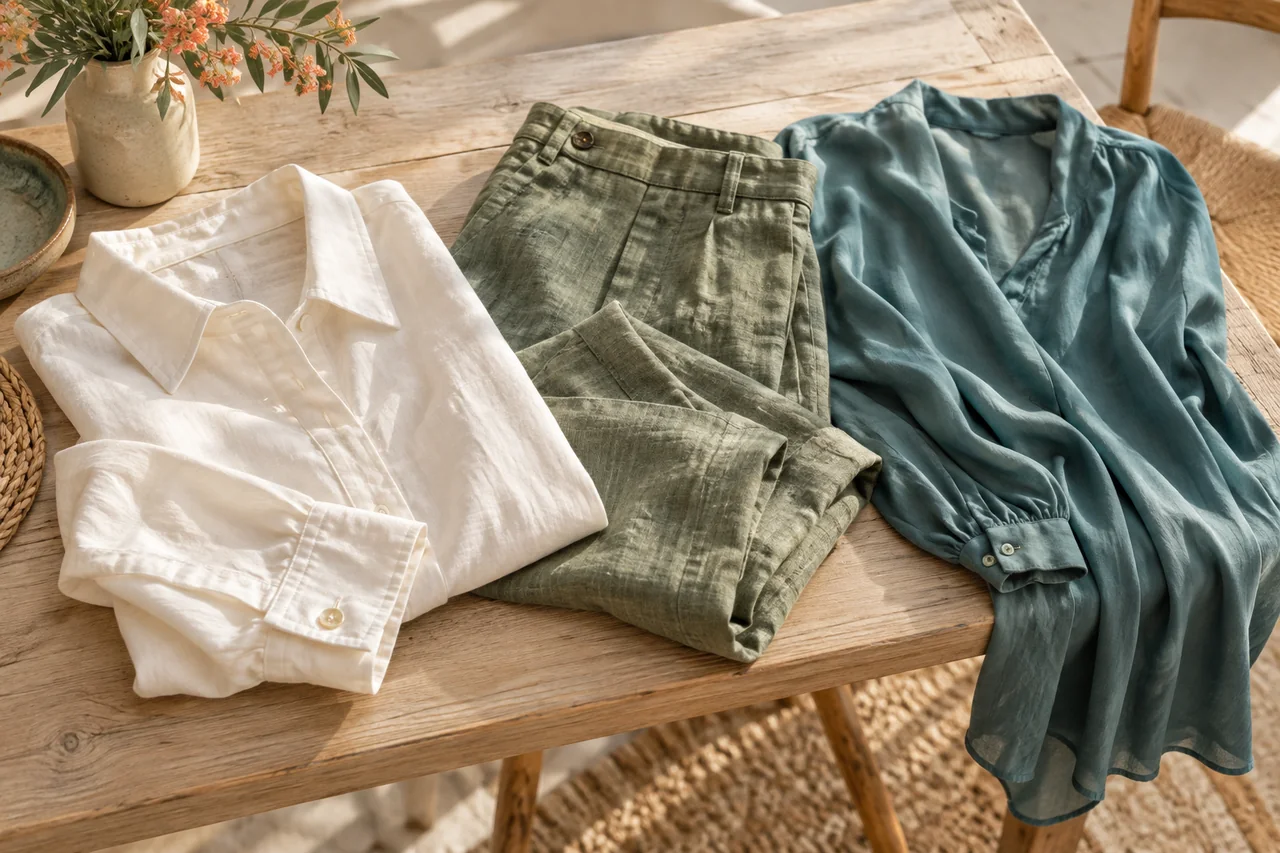
A fibre label is a useful beginning, not a complete description. Cotton, linen and viscose vary with yarn, construction and finishing. Comparing actual garments helps you identify the qualities that suit your wardrobe.
Understand the broad material groups
Cotton and flax used for linen are plant fibres. Viscose is a manufactured cellulosic fibre made from processed cellulose, often wood-derived. Environmental effects depend on raw materials and processing; natural alone is not a complete assessment. Record favourite compositions without assuming identical comfort across all garments.
Compare feel and movement
A firm cotton shirt differs from a soft cotton jersey, and linen blends differ from dense pure linen. Viscose often appears in fluid clothing, but construction still matters. Describe grainy, smooth, structured or softly draping qualities while handling and wearing each piece.
Match the garment to the task
Check daylight opacity, movement and the result of prolonged sitting. Some creasing may be part of the appeal. If you want a smooth appearance with little ironing, acknowledge that requirement. A home wear trial answers your practical question better than declaring one fibre the winner.
Keep care specific
Blends, lining, prints, interfacing and trims affect treatment. Do not transfer a T-shirt routine to a specially constructed dress with the same main fibre. Photograph labels before removal. Ask the manufacturer or a textile-care professional when information is missing rather than trying harsh treatment.
Frequently asked questions
Is linen always airier than cotton?
No universal ranking covers fabric density, weight, fit and lining. Compare the actual garments and how they feel in use.
Can every viscose item be washed the same way?
No. Construction, dye and additional materials may need different care. Follow the individual label and resolve uncertainty before washing.



Questions and experiences
Share a question or a useful experience about this topic. Every contribution is checked before publication. Comments may be written in different languages.
Loading reader contributions…
Opening the form sets a necessary session cookie. No email address is required. Publication is subject to moderation and is not guaranteed. For deletion requests: Contact