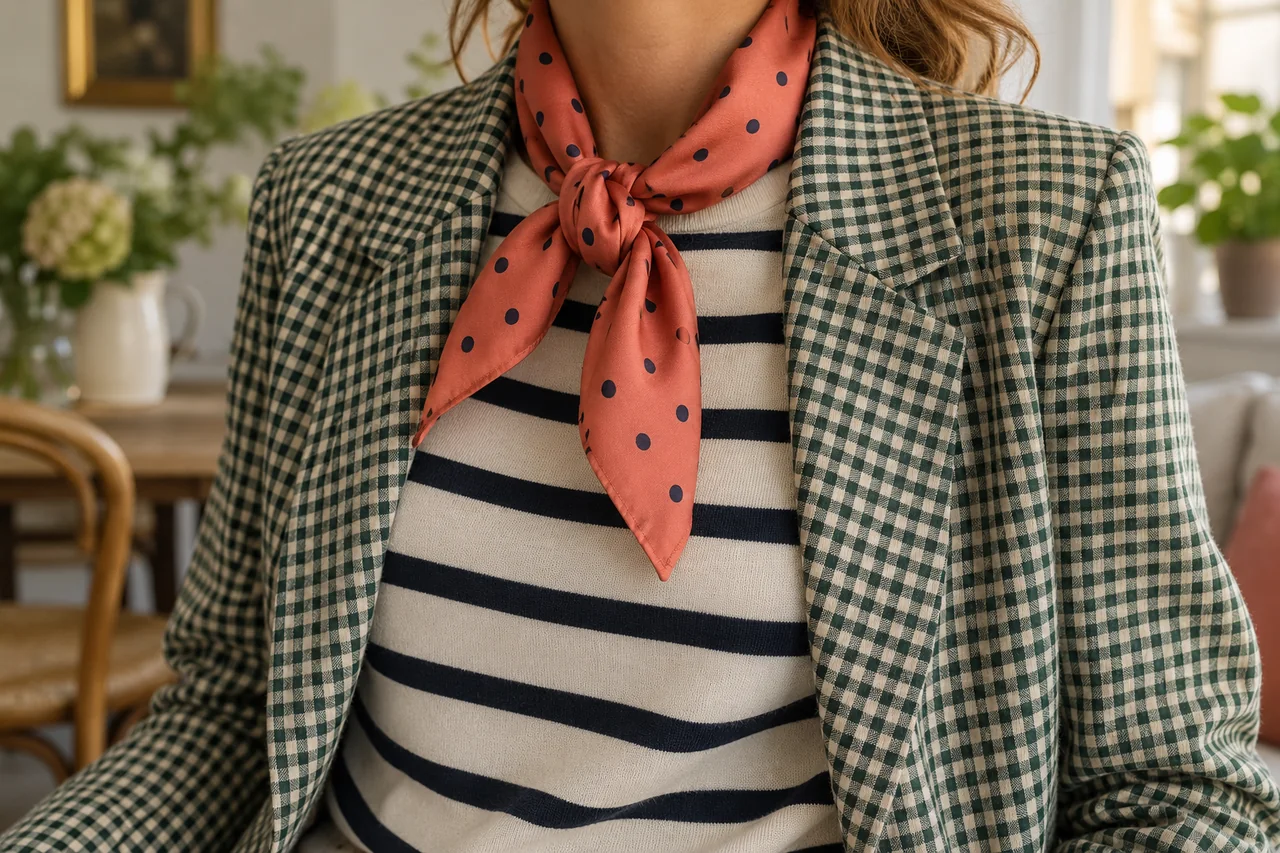
Pattern mixing becomes easier when you choose what connects the pieces and how much attention each receives. Start with what you own and assess the full outfit from normal viewing distance.
Find a common colour
A blue-striped shirt and floral skirt containing navy already have a connection. Exact matching is unnecessary. Try them on, because small details may matter differently when worn, and begin with quiet shoes before adding more accents.
Compare pattern sizes
Small checks and large flowers are easier to distinguish than two dense small patterns, but this is only an entry point. Try both approaches and photograph them from the same distance. A lively close-up may merge into texture at conversational distance.
Control the visible area
Let one pattern occupy more space and another appear in a scarf or detail. A plain jacket can interrupt both. Several large patterned areas are also valid if the expressive effect is intentional and you feel comfortable moving in it.
Build a small pattern library
Record useful properties, such as small checks and large flowers sharing green. Include shine, contrast and washed versus crisp surfaces. Repeat a successful pairing and change only shoes or jacket. If it feels too loud, reduce one area instead of rejecting the whole experiment.
Frequently asked questions
Can stripes be worn with stripes?
Yes. Different widths or directions can create deliberate tension, with a shared colour helping the connection. Assess the result from a little distance.
Must every colour match?
No. A related family or similar lightness may be enough. Keep other accessories quieter while deciding how the two patterns work together.
Questions and experiences
Share a question or a useful experience about this topic. Every contribution is checked before publication. Comments may be written in different languages.
Loading reader contributions…
Opening the form sets a necessary session cookie. No email address is required. Publication is subject to moderation and is not guaranteed. For deletion requests: Contact