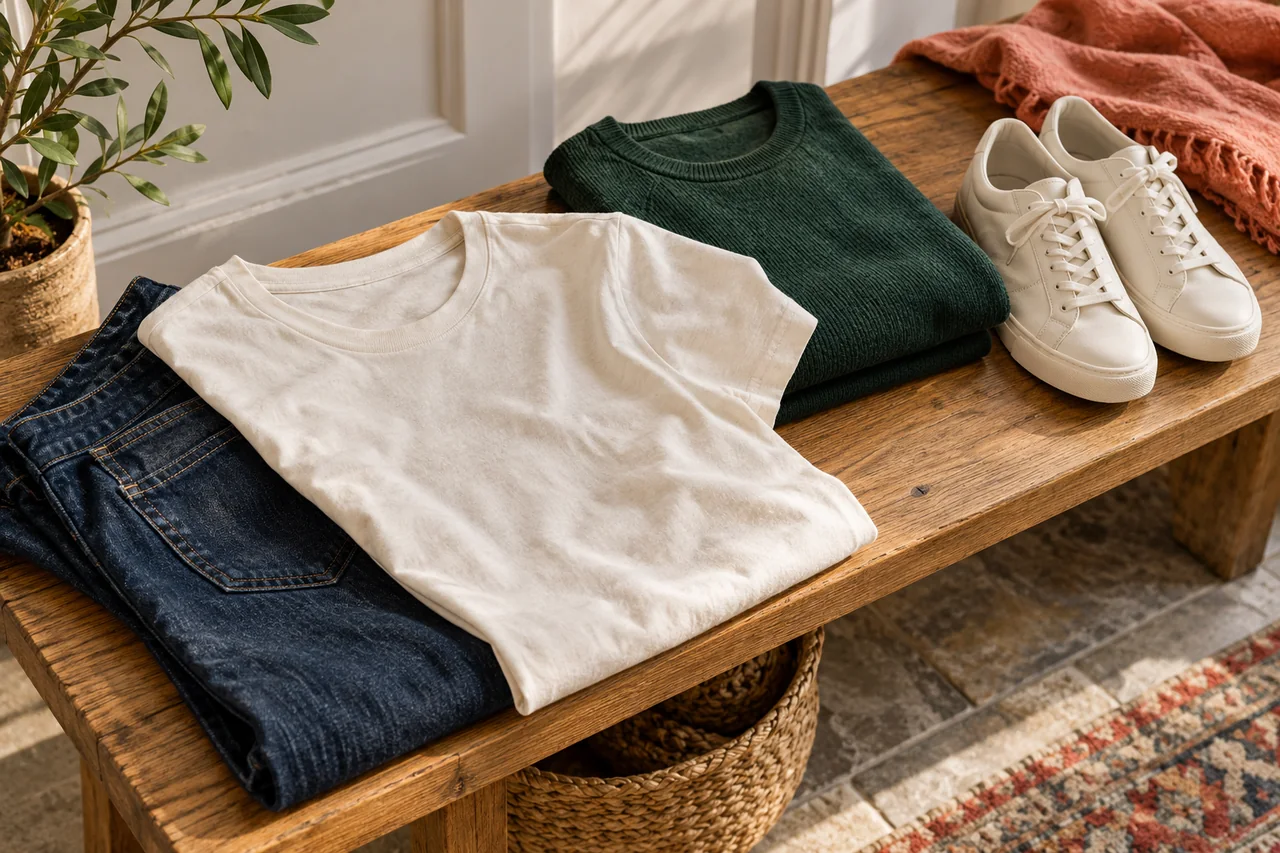
A basic earns its place by doing useful work in your wardrobe. It need not appear on a universal essentials list or be plain and neutral. Begin with a repeated need rather than a product you feel obliged to own.
Describe the missing connection
Do patterned skirts need a quiet top, or do wide blouse sleeves fit under no jacket? State the task without a brand or product. Search existing pieces first: a cardigan may do the work imagined for a blazer, or an untried combination may solve the gap.
Demonstrate versatility
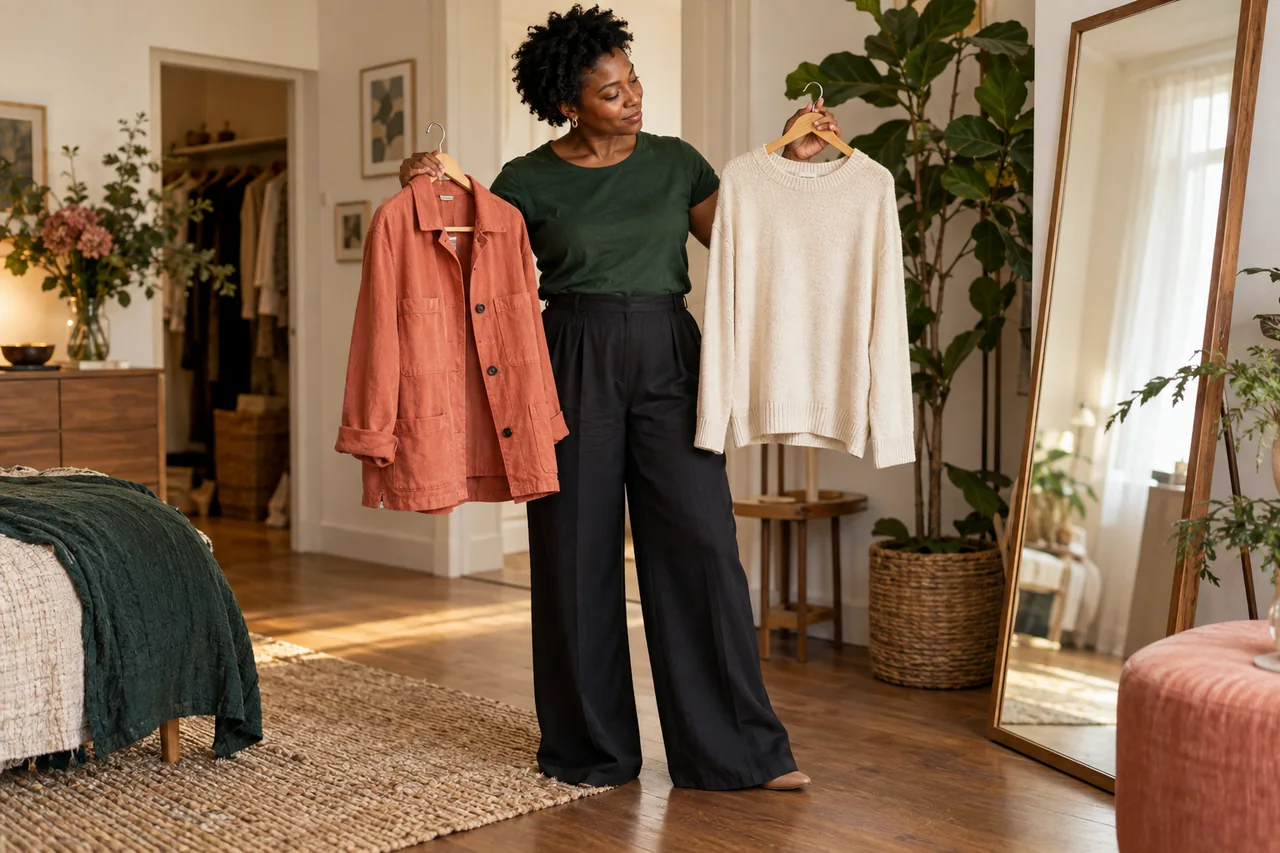
Make three real outfits with existing shoes. A dark red top may connect trousers, a skirt and jeans better than a white T-shirt whose length or transparency makes it difficult. Test different activities as well as colours. A piece useful only in one elaborate outfit may have a special rather than basic role.
Check fit and care
Sit, raise your arms and carry your usual bag. Notice seams, slipping waistbands and sleeves needing adjustment. Read the garment’s care label. Delicate fabric can be a useful basic if its care suits you; a fibre name alone cannot establish the finished garment’s demands.
Keep personality in the foundation
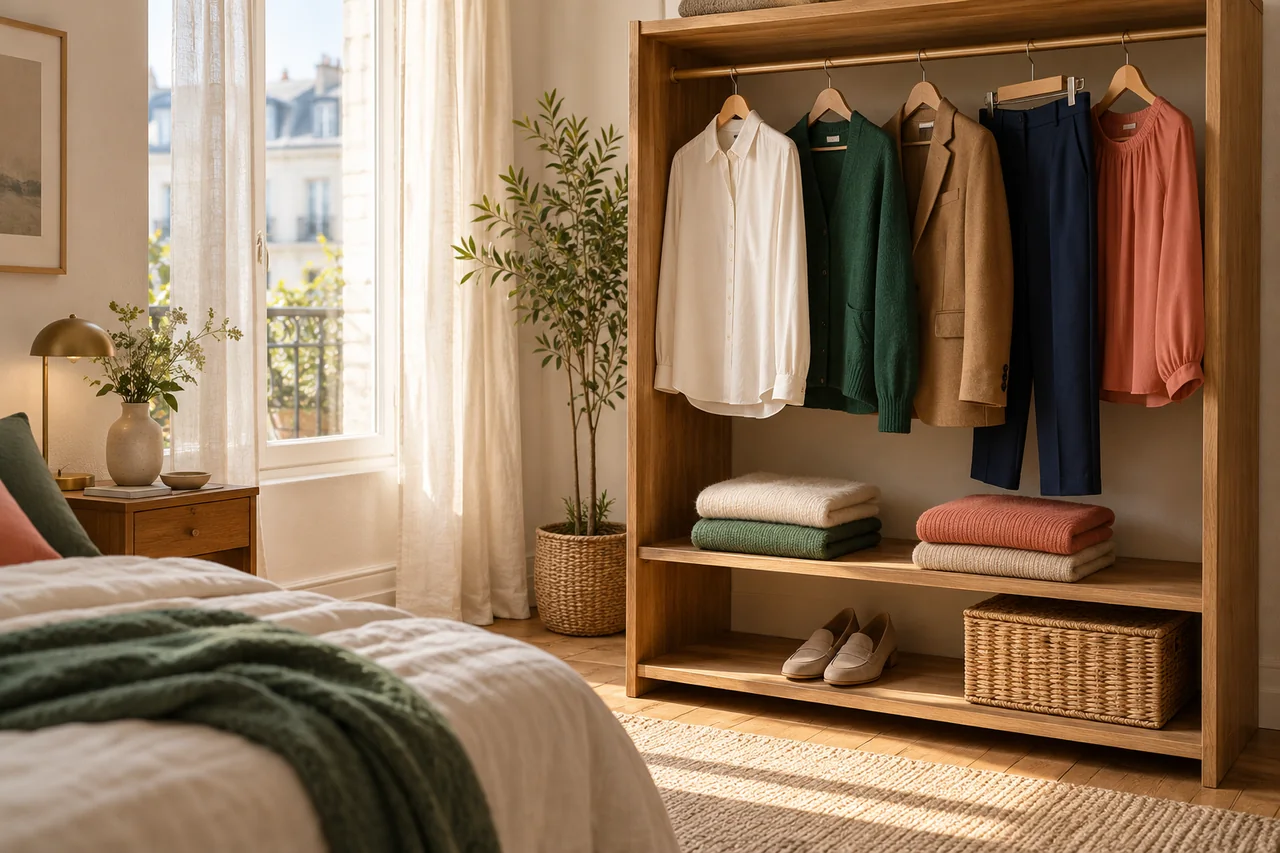
Ribbing, brown tones or wide trouser legs can become recurring features. After several weeks, review which basics genuinely serve multiple tasks. A second version may help when one is constantly unavailable in the wash, but check existing alternatives first.
Frequently asked questions
Are there basics everyone must own?
No. Work, climate, mobility and preferences differ. A commonly recommended garment is optional if it has no recurring purpose for you.
Can a basic be patterned?
Yes. Familiar stripes or checks can connect many outfits when colour, scale and cut work with your clothes.

Questions and experiences
Share a question or a useful experience about this topic. Every contribution is checked before publication. Comments may be written in different languages.
Loading reader contributions…
Opening the form sets a necessary session cookie. No email address is required. Publication is subject to moderation and is not guaranteed. For deletion requests: Contact