
Ash brown can mean different depths and degrees of coolness. Wanting fewer warm reflections is not necessarily the same as wanting an obviously greyed effect. Make these preferences separate decisions before choosing a treatment.
Separate depth from direction
First decide whether to keep your brown’s depth, go lighter or go darker. Then distinguish less reddish from visibly grey-muted. Bring separate examples if helpful and explain their roles. If only one warm reflection bothers you, a complete colour change may exceed the actual aim.
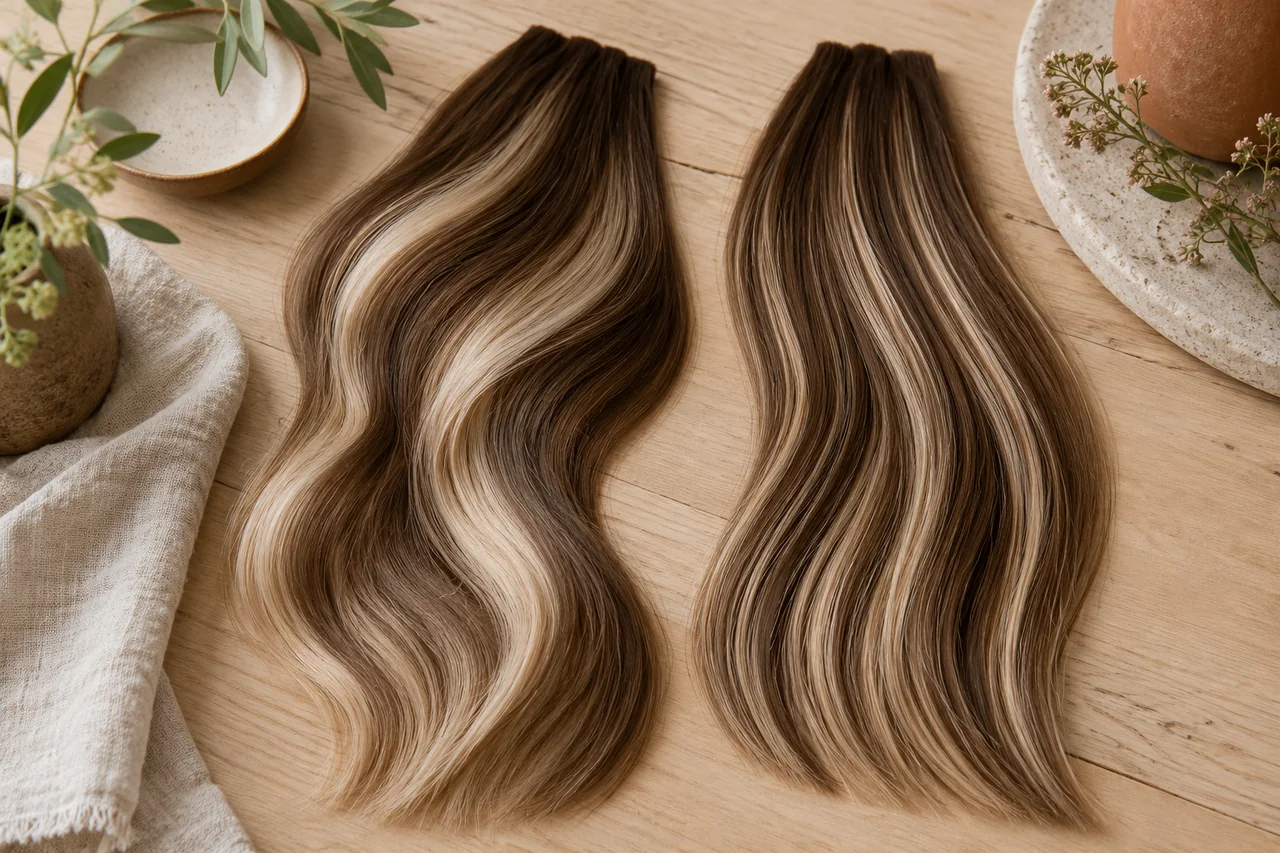
Use real comparison swatches
Compare neutral, warmer and cooler browns at similar depth in the same position. Review suitable indoor light and daylight if possible. This explores preference, not a colour-type diagnosis. Phone processing and displays can shift shades; record the actual swatch reference for clarity.
Disclose the starting history
Tell the salon about previous permanent colour, tinting and lightening, including older treated lengths still present. Bring product names when known and acknowledge uncertainty. Different sections may have different histories. A uniform sample cannot promise the same result over your whole head.
Review ordinary clothing and light
Compare the proposed direction with frequent necklines such as sand, white and black. A softer neutral brown may already meet the wish. If a strongly muted swatch looks too flat in daylight, that is useful preference information rather than inability to wear a trend.
Clarify the aim without a home formula
In a hypothetical comparison, a very cool online reference has the desired depth but too much grey muting. A neutral medium-brown swatch is preferred. The brief becomes similar depth with less warmth but no obvious grey effect; the technical route still requires assessment of the actual hair.
Discuss upkeep and reactions
Ask what may change between visits, what signals a follow-up and which products are needed versus optional. Do not independently layer strongly pigmented products to remove every warm reflection; follow product guidance and hair-specific advice. BfR notes possible allergic reactions to certain dye ingredients. Seek professional advice before another application if you have reacted previously.
Frequently asked questions
Is ash brown always dark?
No. It describes a muted cool direction across different depths. Show the desired lightness as well as naming the shade.
Do I automatically need purple or silver shampoo?
No. Usefulness depends on the colour, product and aim. Ask what it should do and how its manufacturer instructs use before buying.
Does it suit only one skin type?
No fixed rule is necessary. Compare it with your appearance and usual clothes; a neutral shade may meet a wish for less warmth better than a strongly muted one.


Questions and experiences
Share a question or a useful experience about this topic. Every contribution is checked before publication. Comments may be written in different languages.
Loading reader contributions…
Opening the form sets a necessary session cookie. No email address is required. Publication is subject to moderation and is not guaranteed. For deletion requests: Contact