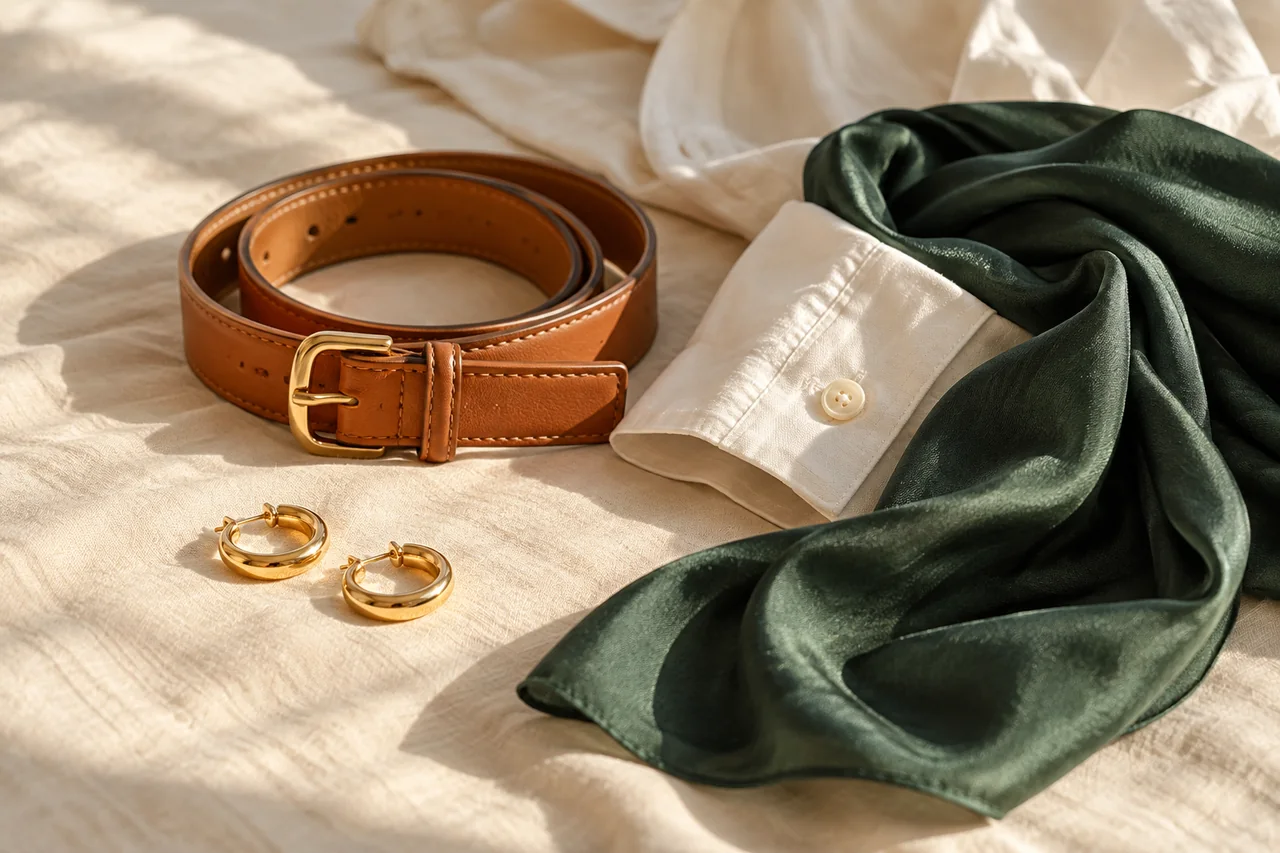
Accessories can warm, carry, shape or express personal meaning. Some do several jobs at once. Begin by asking what the outfit needs; adding nothing is also a complete decision.
Define the role
Does the scarf provide warmth, the belt alter shape or the jewellery carry meaning? Compare two options in the whole outfit. A bag may connect a colour and carry belongings, but no open task means no compulsory addition.
Map existing attention
Large collars, shiny buttons, patterns and glasses already act as accents. A necklace may disappear under a collar while earrings compete or connect with it. Compare one strong focus with several small details; no universal rule requires removing an item before leaving.
Compare size, spacing and finish
Rings grouped on one hand differ from the same rings spread out. Wide belts create a stronger division than narrow ones. Repeated metal colours or a two-tone ring can connect jewellery, while matte and polished surfaces change prominence. Check normal light and conversation distance.
Use the day as the final test
Type, put on a coat and carry your bag. Notice bracelets striking the desk, earrings catching scarves or belts pressing while seated. Task-specific safety requirements take priority. Store frequently worn combinations together and leave occasion pieces separately accessible.
Frequently asked questions
How many accessories are too many?
There is no fixed count. Scale, contrast, proximity and intention matter more: several fine pieces may be quieter than one large scarf.
Can gold and silver colours mix?
Yes. Repetition or a two-tone piece can help, but an even mixture is unnecessary. Choose the overall effect you enjoy.
Questions and experiences
Share a question or a useful experience about this topic. Every contribution is checked before publication. Comments may be written in different languages.
Loading reader contributions…
Opening the form sets a necessary session cookie. No email address is required. Publication is subject to moderation and is not guaranteed. For deletion requests: Contact