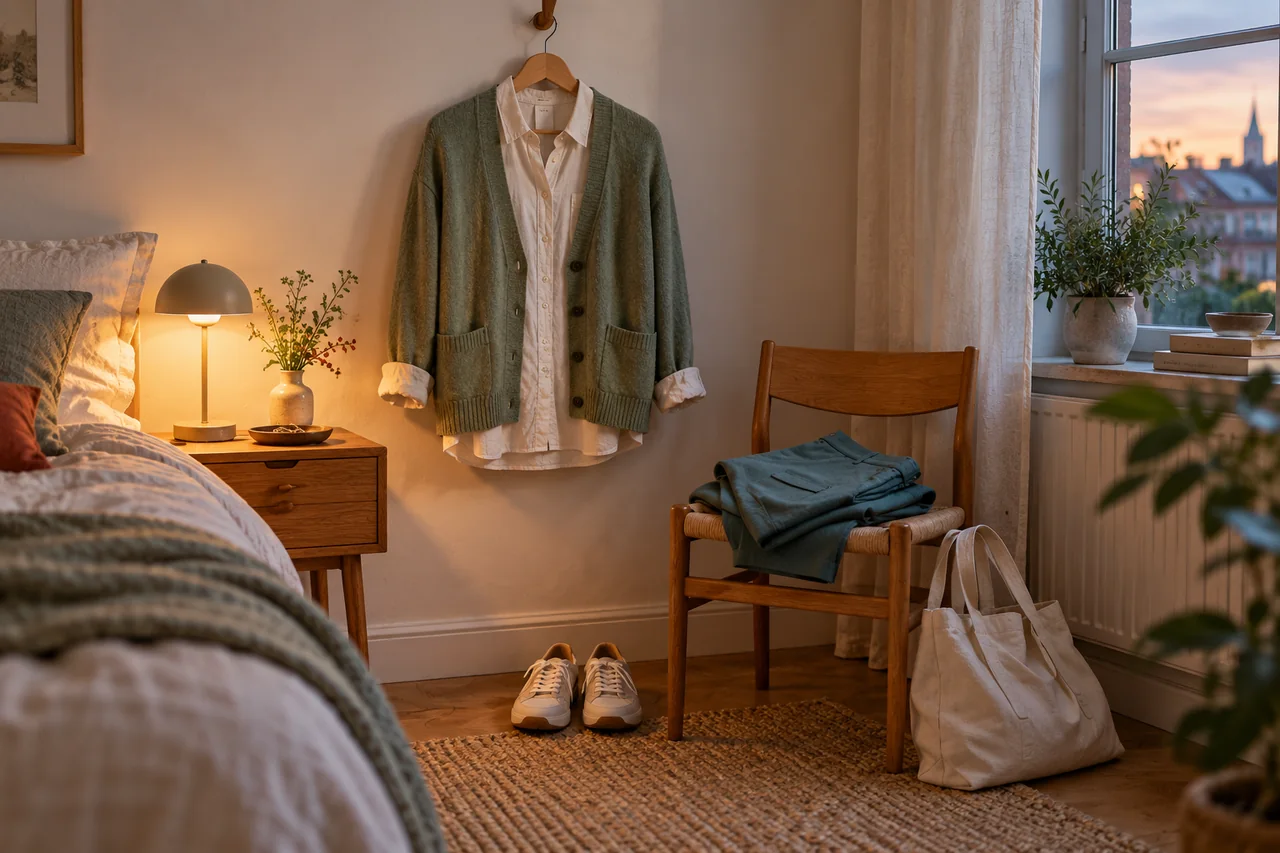
An outfit routine should reduce a specific difficulty, not add a complicated system. Observe what costs time or energy, then choose one action that makes the next morning easier.
Identify the bottleneck
Over a week, notice whether the problem is clean tops, missing shoes or uncertainty about combinations. More outfit photos will not fix laundry availability. State one action, such as putting tomorrow’s shoes ready, and connect it to an existing habit.
Develop three personal formulas
Use proven pieces to make combinations for an ordinary workday, longer journey and social occasion. A formula might be straight trousers, soft top and short jacket. Photograph the actual pieces and note temperature and purpose. It is a reliable starting point, not a uniform requirement.
Use a short evening check
Review tomorrow’s needs and whether the clothes are clean, complete and weather-appropriate. Include underwear, socks, shoes and bag. A dedicated hanger or shelf can replace laying everything out. Link the check with preparing a workbag so it remains brief and repeatable.
Keep reserve and review small
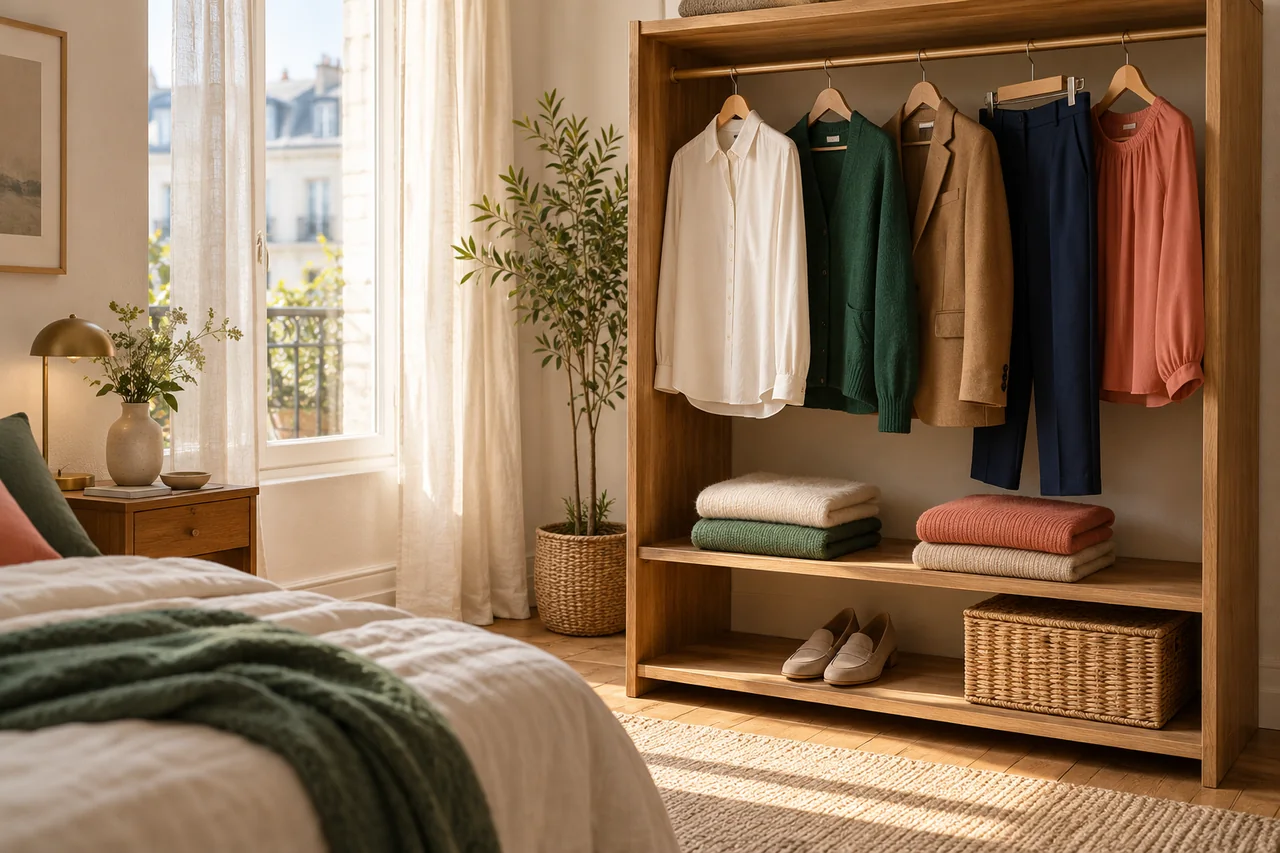
Maintain one comfortable complete alternative for changed weather, spills or plans. Once a week, adjust only the part that caused difficulty, perhaps laundry timing or jewellery storage. Avoid accumulating rules; the routine should work on tired days and leave room for experiments.
Frequently asked questions
Will routines become boring?
You can repeat the practical process while varying colours, layers and accessories. On an experimental day, the familiar option remains available in reserve.
How do I start with almost no morning time?
Choose one evening action, such as preparing a full outfit, and test it for several days. Solving the actual bottleneck may require no elaborate planning or digital tool.


Questions and experiences
Share a question or a useful experience about this topic. Every contribution is checked before publication. Comments may be written in different languages.
Loading reader contributions…
Opening the form sets a necessary session cookie. No email address is required. Publication is subject to moderation and is not guaranteed. For deletion requests: Contact