A fictional example: from dinner to the club page
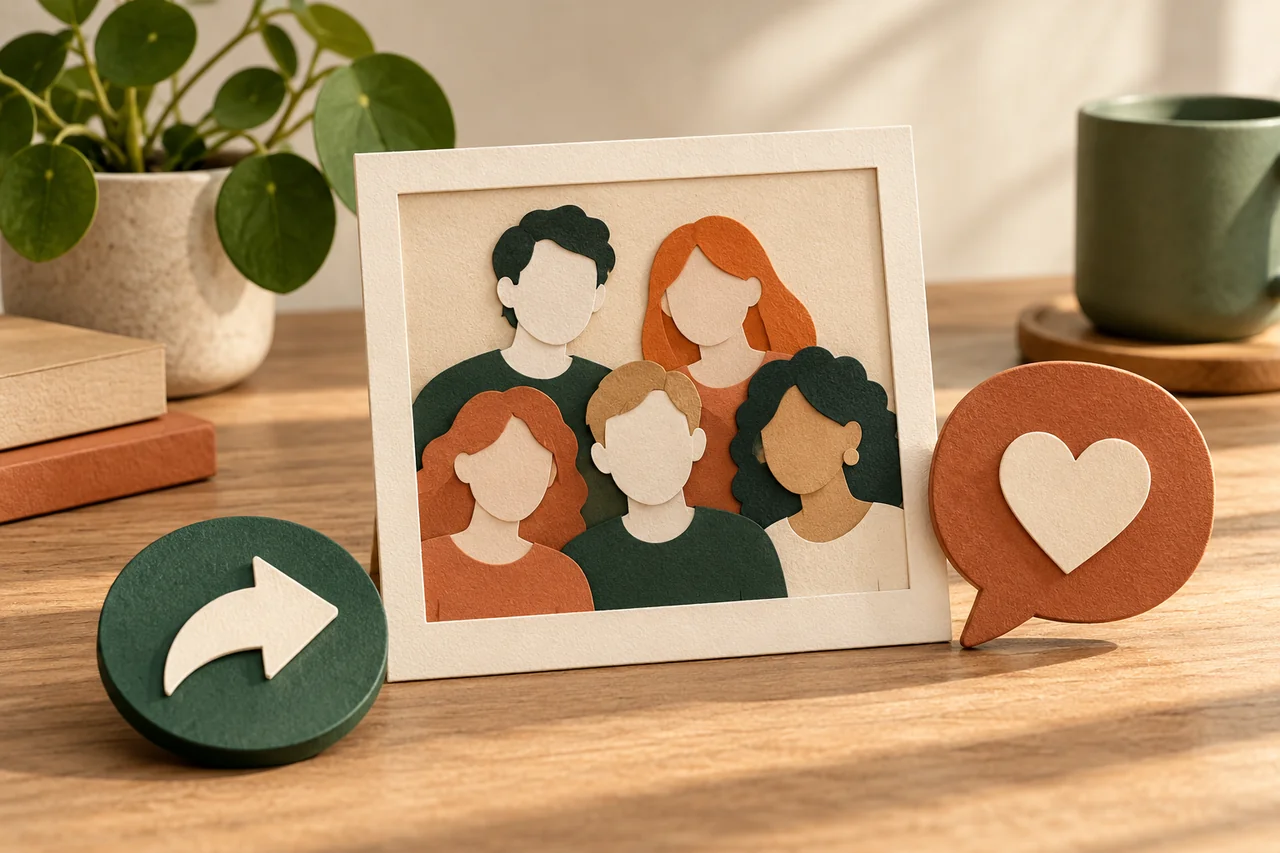
Lea receives a group photograph after dinner with friends. She would like to use it on a public club page, but one person expected it to remain in the small chat. Lea asks about that particular picture and destination instead of treating the chat message as permission. When someone prefers not to appear publicly, she chooses a photograph of the table. The occasion can still be remembered without pressuring anyone to agree.
A useful request explains three things
“Can I share this?” may leave too much unclear. Identify the photograph, describe the audience and mention the proposed caption. A public club account is different from a message to two friends. If you later want to use the photograph in advertising or a different context, clarify the permission again. Avoid pressure such as saying that everyone else has already agreed or that refusing would spoil the group’s celebration.
- Show the actual image rather than referring only to the event.
- Name the platform and describe who can access the post.
- Make it possible to decline without providing a personal explanation.
Consider recognition and ownership separately
A visible face is not the only way to recognise someone. Clothing, a name badge, location or caption may identify the person too. Review the wording as well as the image. Permission from the photographer may also matter alongside the preferences and rights of those pictured. Receiving a copy does not settle every question about use. For public, professional or advertising purposes, make the agreed scope especially clear and keep an appropriate record.
When someone prefers not to appear
Choosing a different photograph is often the simplest answer. You can also ask whether a newly taken image without that person would work. Slight blurring or placing a symbol over a face does not guarantee anonymity. Do not look for a technical workaround to a clear refusal. If the picture is already online, discuss removal or replacement calmly and specifically, without circulating the disputed image to a larger audience in the process.
Do not turn a courtesy rule into universal law
Legal requirements and exceptions depend on the country, circumstances and intended use. The Swiss privacy authority, for example, explains image rights and different group-photo situations; its guidance is not a worldwide rule. Pictures of children, intimate images, disputes and commercial uses need more careful consideration. This article offers a respectful practical process, not individual legal advice. Even freely given permission cannot prevent recipients from making later copies or using a screenshot elsewhere.
Your checklist
The checkboxes are for your own reference. No entries are sent to us. To keep a copy, print the page or save it as a PDF using your browser menu.
Common questions
Does posting in a group chat count as permission?
Not automatically. What was actually agreed matters. Receiving or viewing a photograph in a small circle is different from permission to publish it publicly.
Is a sticker over the face enough?
Not reliably. Other features can identify the person. If someone does not want to appear, another photograph is often the clearer option.
What if someone later asks for removal?
Take the request seriously and consider prompt removal or replacement. If there is a dispute or legal uncertainty, an appropriate adviser should assess the particular circumstances.
Sources and further information
Primary sources from public authorities, consumer organisations and providers. A source may be in another language; follow the guidance that applies to your service and where you live.
- Swiss FDPIC: Photos and privacySource review date:
- FTC: Heads Up — Stop. Think. Connect.Source review date: