A situation you might recognise
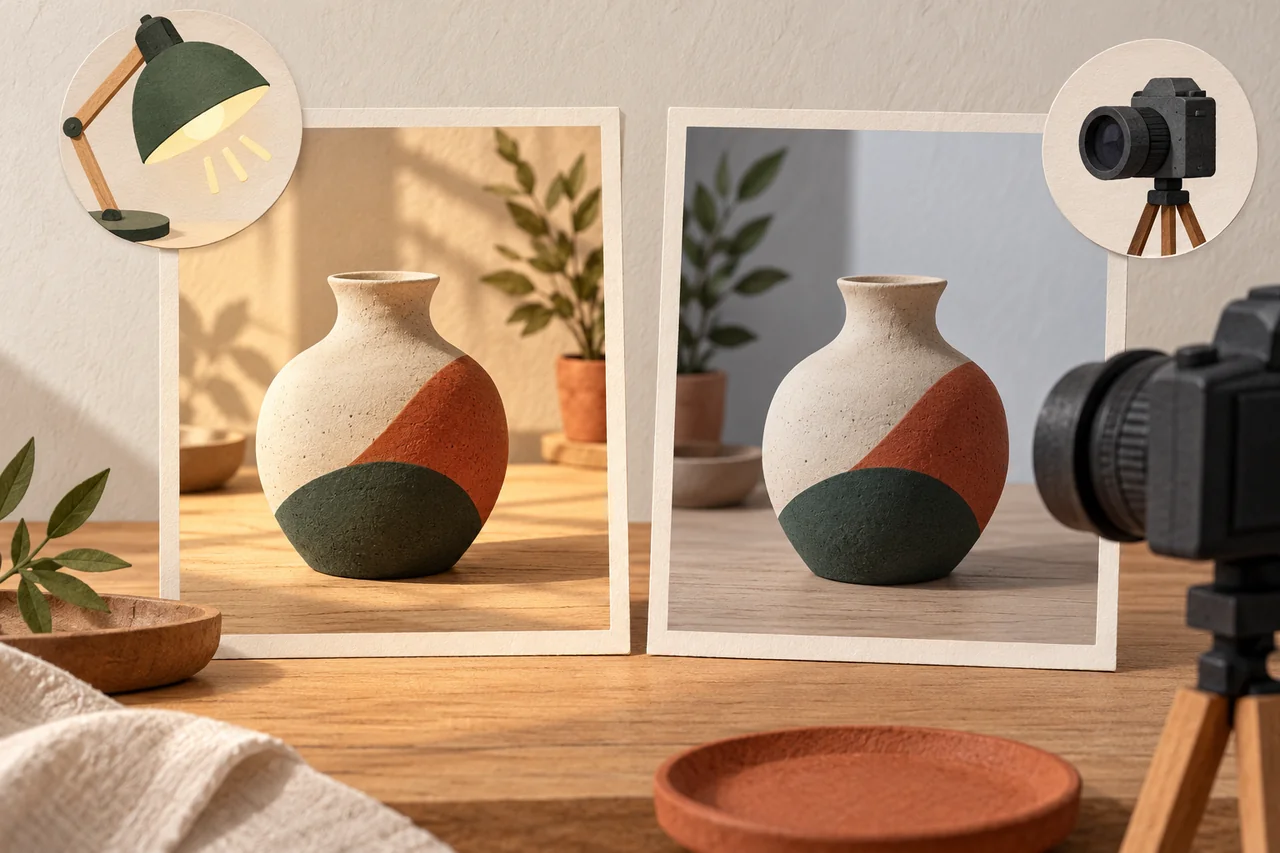
Fictional example: Leah sees an advertisement with two portraits promising visibly younger skin. In the second photograph, the person smiles, the light appears softer and the crop is tighter. Leah can describe these differences. She cannot identify a treatment from them or confidently declare that the image is fake.
She writes down the precise claim: which product supposedly produced which change, and over what period? This separates the seller’s statement from her first impression. When those details are missing, the result remains unexplained even if the photographs look convincing.
Compare the conditions, not the person’s worth
Look at the camera angle, posture, clothing, expression, lighting and crop. A change in any of these can affect what you notice. Makeup, styling and distance from the camera may matter too. You do not need specialist software, and the exercise should not become a search for supposed flaws in someone’s body.
Look for dates and an explanation of how both pictures were taken. Missing information does not establish deception; it limits what the comparison can support. Image metadata may be absent or altered, so it cannot reliably settle the question on its own.
Separate a change from its proposed cause
Even genuine, comparable photographs do not describe everything that happened between them. Changes in everyday habits, other products or an additional treatment might be relevant. A photograph also cannot establish a person’s underlying health or the circumstances of their treatment.
Look for an accessible account of the product studied, the people involved and the outcomes measured. Check whether the seller presents only selected success stories. Calling something an individual result does not tell you how often similar results occur, or what happened to people who did not benefit.
Make the purchase decision without visual pressure
Visit the seller’s information independently of the advertisement. Note the price, recurring costs and the exact service or product on offer. Then write down the question that remains unanswered. A countdown or discount does not make missing evidence more reliable.
Do not upload private body photographs to an unfamiliar analysis service just to check an advertisement. Its public claims and cited sources are enough for an initial assessment. If the product would affect a health decision, discuss it with an appropriately qualified healthcare professional.
Accept the limits of checking pictures
You do not have to prove an advertisement false before deciding to wait. A reasonable conclusion is that the pictures are insufficient for your decision. Avoid circulating an unsupported accusation of fraud, just as you would avoid repeating an unsupported promise of results.
This article explains how to assess advertising; it does not provide medical advice. Do not alter prescribed treatment because of a photographic comparison. Our guide to separating health advertising, personal experience and professional information provides a useful next step.
Your checklist
The checkboxes are for your own reference. No entries are sent to us. To keep a copy, print the page or save it as a PDF using your browser menu.
Common questions
Does different lighting prove an image is fake?
No. It makes the comparison less informative, but it does not prove manipulation or establish an intention to mislead.
Are genuine photographs evidence that a product works?
They may document one person’s change. Whether a product caused that change, and whether it helps other people, are separate questions requiring further evidence.
Should I share a suspicious image publicly?
If you share it for discussion, explain the uncertainty and avoid speculation about an identifiable person’s health. Reporting it privately to the platform may be more appropriate.
Sources and further information
Primary sources from public authorities, consumer organisations and providers. A source may be in another language; follow the guidance that applies to your service and where you live.
- FTC: The Truth Behind Weight Loss AdsSource review date:
- MedlinePlus: Evaluating Health InformationSource review date: