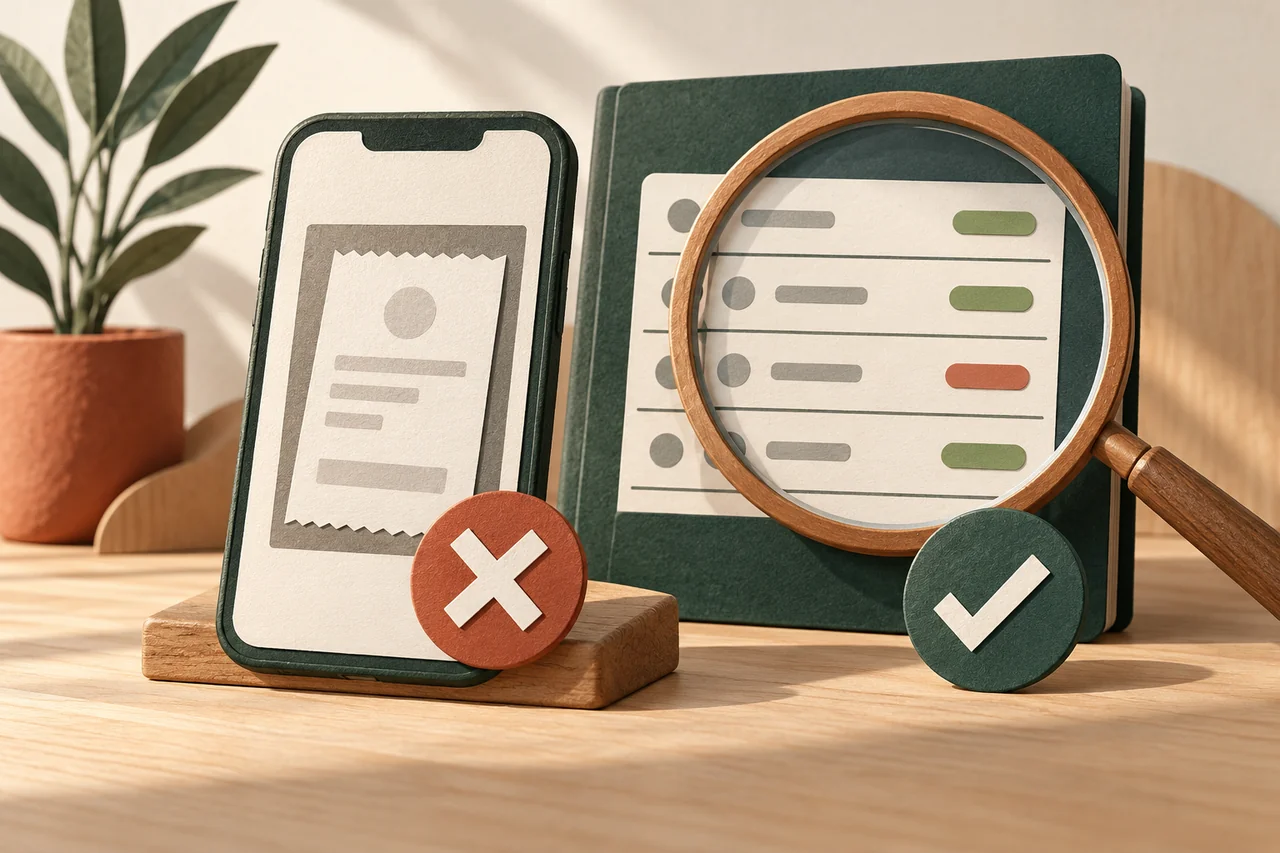
A picture can only claim that something happened
Fictional example: Eva sells a used coat. The interested buyer shows a screenshot displaying the agreed amount. Her own payment app shows no corresponding receipt. She calmly explains that she will first check the agreed payment method. The image could show an instruction, a different recipient or an edited display. Eva does not have to determine which explanation applies. She does not yet have enough evidence to hand over the coat as paid.
Open the right place and compare the details
Start the app you already use or follow your own bookmark. Do not use a link in the supposed confirmation. Find the matching transaction and check the amount, currency, date and displayed status. Ensure that it relates to you and fits the sale. A general change in your account balance is not enough. If the service shows a delay or pending status, read its explanation or ask the genuine support team for clarification.
Distinguish bank transfers from protected marketplace payments
For an ordinary bank transfer, the entry in your own account matters more than someone else’s transfer instruction. In a protected marketplace process, the service may hold the money initially and release it later. You then need to follow the genuine marketplace status and dispatch requirements. Even a visible transaction is not, for every payment method, a guarantee against later reversals or disputes. The rules of the service actually being used remain important.
Handle pressure and alleged duplicate payments separately
If someone insists on immediate collection, you can stay with the agreed procedure. A departing train or waiting driver does not make a screenshot more authoritative. If a person claims to have paid too much or twice, do not immediately send money to a different address. Check your own transaction first and arrange any necessary refund through the original service. This avoids turning an unclear incoming payment into an additional outgoing transfer of your own.
Keep useful records while protecting private information
Record the transaction reference where it is needed for your sale and keep the important messages. Do not send complete statements or screenshots showing your balance, unrelated transactions and personal details just to justify your doubt. Relevant records can be provided selectively to the marketplace or bank when reporting a problem. If you already handed over the item and payment is missing, contact the designated support promptly. Reporting records the case but cannot guarantee reimbursement.
Your checklist
The checkboxes are for your own reference. No entries are sent to us. To keep a copy, print the page or save it as a PDF using your browser menu.
Common questions
Is an email apparently from the payment provider enough?
Treat it as a prompt to check your independently opened account. Sender displays and email design can be misleading. If no matching transaction is present, clarify the situation through the service’s official help route.
Should I always wait for the money to reach my bank account?
That depends on the agreed payment method. Protected marketplace arrangements may release funds later. Follow the genuine transaction status and dispatch conditions. If unsure, ask the provider before changing the process on your own.
What should I do about an alleged overpayment?
Do not forward the claimed excess to a new address or a third party. First verify the actual incoming payment and discuss any correction with your bank or payment provider through official channels. A refund should correspond to the identifiable original transaction.
Sources and further information
Primary sources from public authorities, consumer organisations and providers. A source may be in another language; follow the guidance that applies to your service and where you live.
- BACS: Finanzieller Schaden – Zahlungsnachweise prüfenSource review date:
- FTC: Fake payments and bogus refund requestsSource review date:
- Kleinanzeigen: Geschützte ZahlungsabwicklungSource review date: