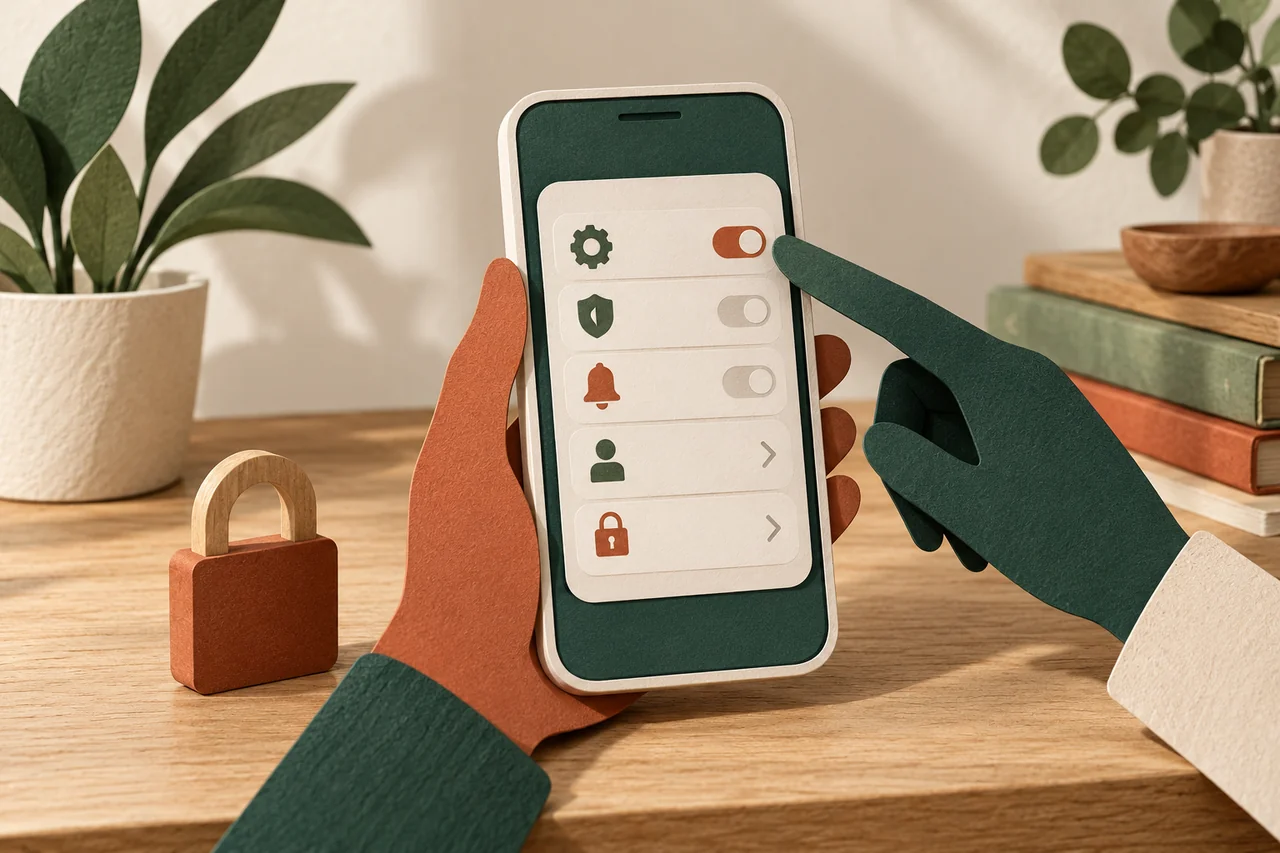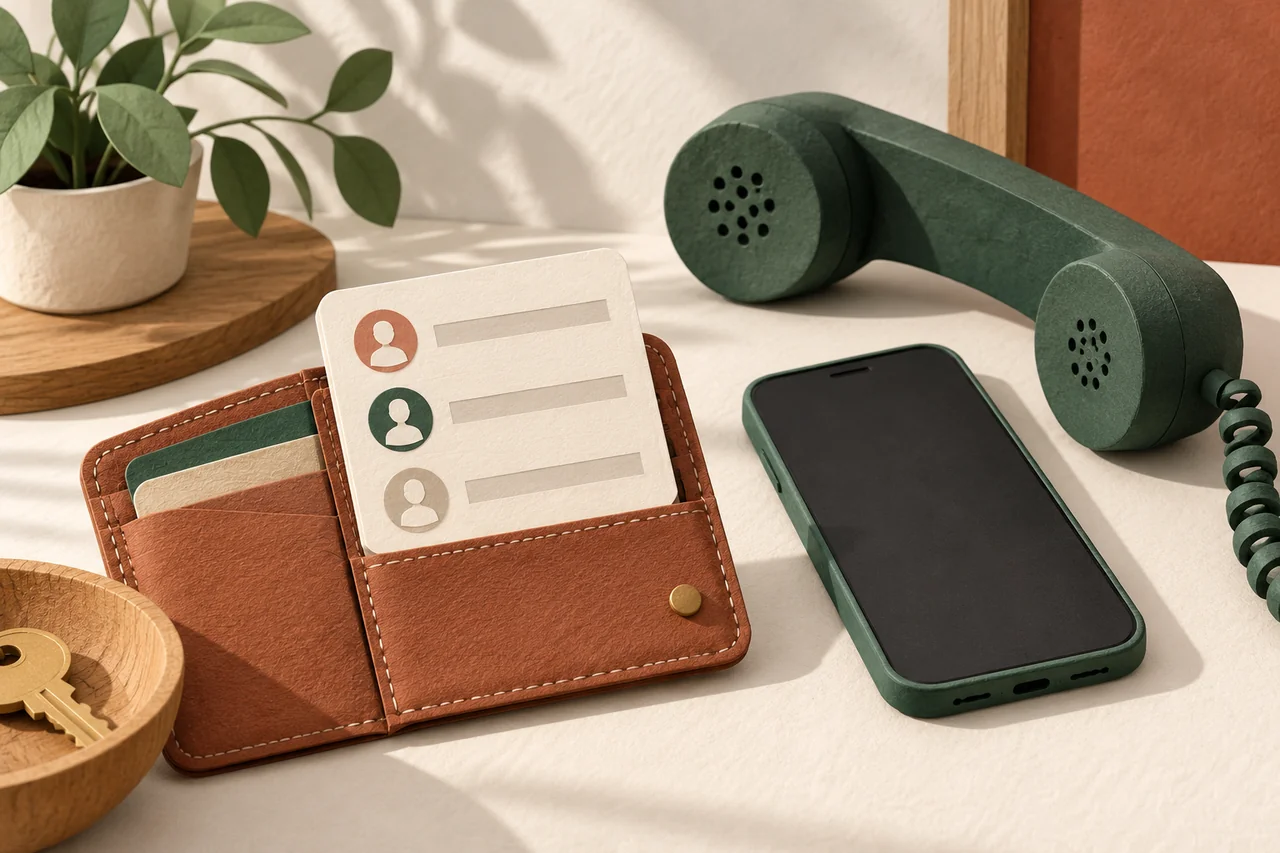
A card for a specific disruption
Fictional example: Luis discovers that his phone is missing while he is out. His main contacts are stored only on that device. At home, however, he has a small card listing two willing trusted people and his mobile provider’s official contact. He can use another phone to work out the next steps. The card does not unlock an account or solve the loss on its own. It means that every question does not first require access to the missing phone.
Include contacts with a clear purpose
Start with two people who agree to be listed. Add your mobile provider, bank or relevant advice service if needed. Label the purpose: a general question, a lost device or an unfamiliar payment. A long collection of random numbers is harder to use. Check responsibilities, availability and any charges. Contacts valid in one country may not be appropriate while travelling. Emergency assistance and ordinary customer service have different jobs; make the distinction clear so the list does not create confusion in a stressful moment.
Verify the details independently
Obtain numbers from existing trusted documents, the provider’s official app or its website opened independently. A number supplied in an unexpected invoice, text or warning is not independent confirmation. Switzerland’s BACS has also reported scams designed specifically to make people call a number included in a message. Note where you checked each entry. Adding a date makes it easier to see which details need another review following a move, a changed phone number or a switch to a different provider.
Keep the design legible and restrained
Use readable writing and clear names instead of unexplained abbreviations. Leave space between phone numbers. A short reminder such as “Check an unusual money request with a known contact first” can support the agreed routine. This card is not a password book or a place for every medical and financial detail. Avoid unnecessary information about relatives. Decide whether a copy at home or with someone who explicitly agrees would be useful, and choose how to protect it while keeping it reasonably accessible.
Check the limits and keep it current
Without making an emergency call, check whether you can find and read the card and whether another usable contact route is available. A written phone number alone will not overcome a complete network outage. Do not make test calls to emergency services. Review the list when details change and occasionally with the people named. For an actual danger or ongoing financial loss, use the relevant official help route promptly. The card supports orientation; it cannot promise constant availability, successful recovery or reimbursement.
Your checklist
The checkboxes are for your own reference. No entries are sent to us. To keep a copy, print the page or save it as a PDF using your browser menu.
Common questions
Should I add my bank account numbers?
Complete account details are unnecessary for this simple contact card. Keep any needed contractual records separately and appropriately protected. Passwords and security codes do not belong on it.
Can I save a photograph on my phone instead?
That can be an additional copy, but it will not help much if that same device is missing, locked or out of battery. Arrange independent access too.
How do I know a number is genuine?
Compare it with an official source you opened yourself or current records you already trust. An incoming caller display or a number supplied in a message is not enough.
Sources and further information
Primary sources from public authorities, consumer organisations and providers. A source may be in another language; follow the guidance that applies to your service and where you live.
- BACS: Zunahme bei Callback-Betrug, September 2026Source review date:
- FTC: How to handle unexpected calls that claim your money is at riskSource review date:
- FTC: Scammers Use Fake Emergencies To Steal Your MoneySource review date: